Mille et Une Nuits
A performative opera by Sorour Darabi as part of the ‘wielding fissures’ series
Performance Dance Musik
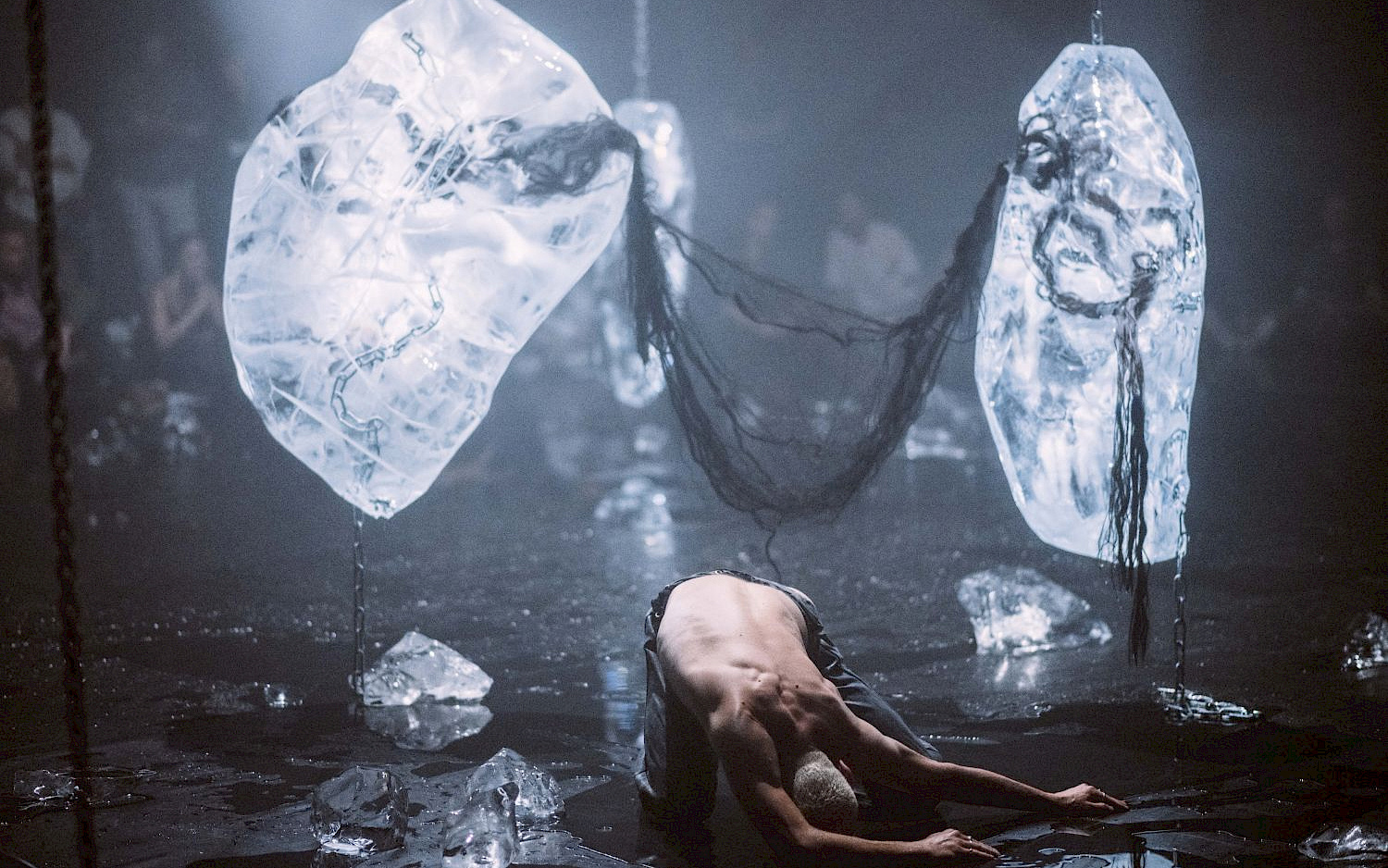
© Camille Blake
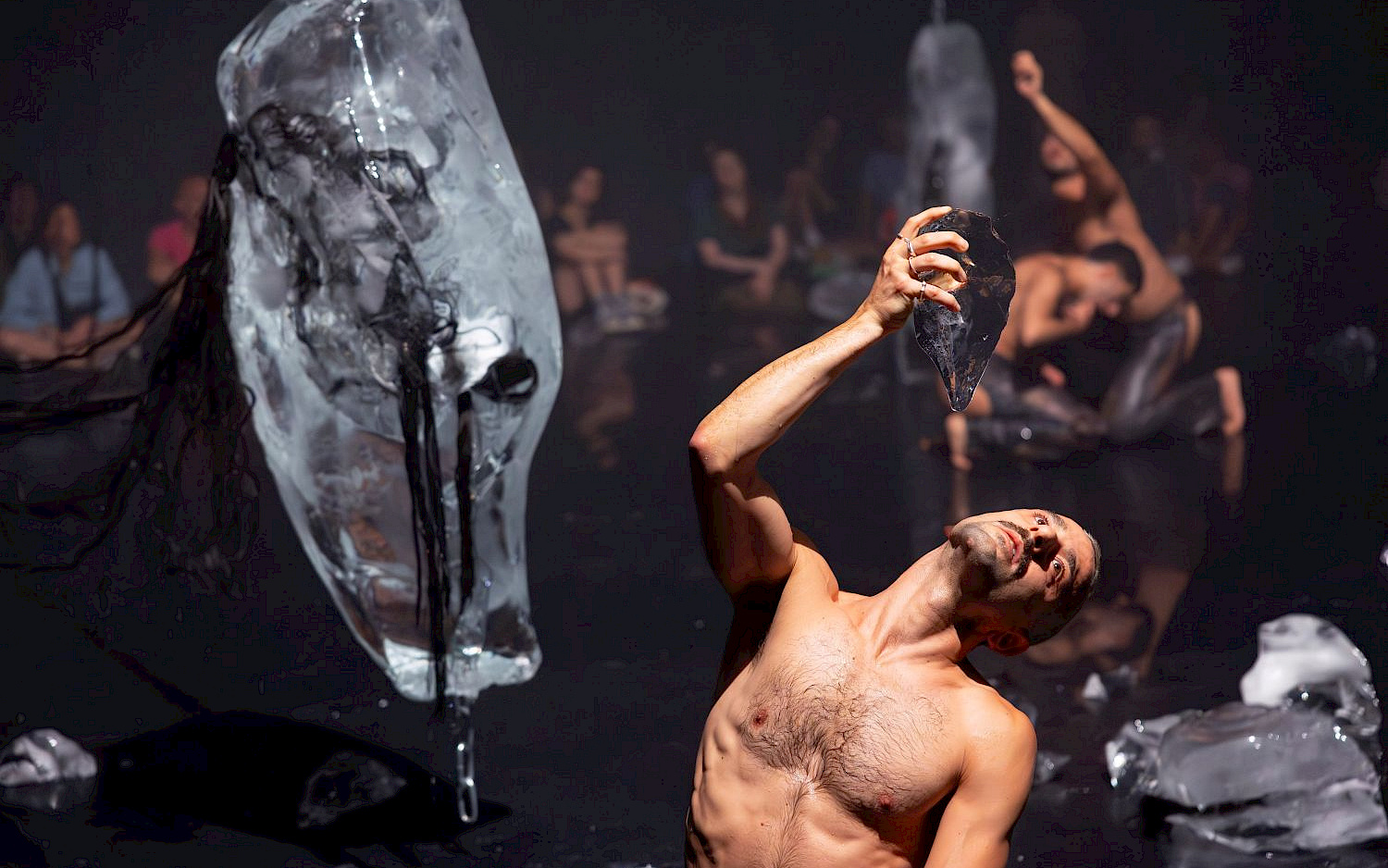
© Laurent Philippe
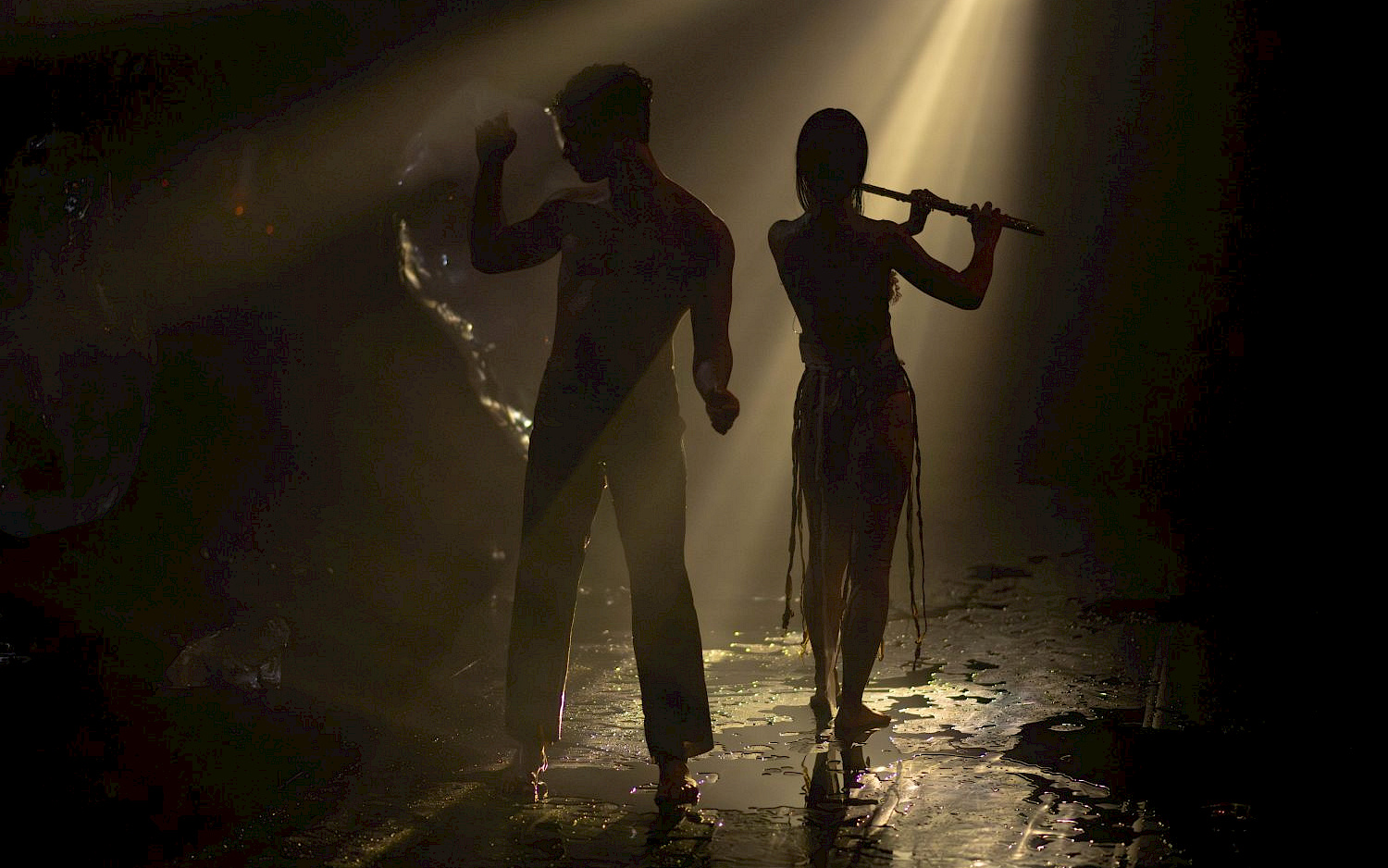
© Camille Blake
Halle
Fr 2026 19:00h German Premiere, with Audio Description. Local Hosting afterwards
Sa 2026 21:00h
Ticket Prices
€18 reduced €14
Combined ticket / Sat 1 Aug
featuring “Adorno” by Alice Ripoll
€28 reduced €20
Ticket Prices
18 Euro ermäßigt 14 Euro
Kombi-Ticket / Sa 01 08
mit „Adorno“ von Alice Ripoll
28 Euro ermäßigt 20 Euro
Out of the vast expanse of the night, an opera for the 21st century emerges, bringing new aesthetics and perspectives, and a different relationship to the world: Iranian choreographer Sorour Darabi presents his first opera in Radialsystem with “Mile et Une Nuits” - an immersive performance, which gives space to voices that were pushed aside in ancient myth. The German premiere of Darabi’s opera also marks the opening of the new series wielding fissures – carving cracks in the surface of the now in Radialsystem.
“Mille et Une Nuits” illuminates “One thousand and One Nights” from the perspective of the storyteller, Scheherazade. The original work, conceived by a heterosexual cis man, was often criticised for reducing the figure of Scheherazade to a storytelling instrument, banishing her body, her wishes and her subjectivity into the background to serve the author’s purposes. In Sorour Darabi’s “Mille et Une Nuits”, the night is not just a metaphor for the creation of stories: it is a space in which Scheherazade’s true identity can finally blossom - as queer myth, far away from the demands of a cis-heteronormative world.
Embodied Practice with Sorour Darabi
Wed 29 07 5.30 pm
Admission is free.
The number of participants is limited, please register in advance
Local Hosting with Sorour Darabi
Fr 31 07 following the performance, in English
Co-hosts kiana rezvani (choreographer), Dr. Ashkan Sepahvand (artist and writer)
Visitor Information
Duration
approx. 100 minutes
Content Note
The performance includes nudity, high-pitched sounds, strobe lighting, darkness and fog.
Lyrics in English and Farsi
As the audience is invited to move around the stage area, there are no seats in the auditorium. If you require a seat, please contact ticket@radialsystem.de.
Audio description and tactile tour, Friday 31 July
The tactile tour begins at 6:30 p.m. Meeting point: the foyer.
We kindly ask you to register by phone at +49 (0)30 288788588 or by email at ticket@radialsystem.de.
Audio description is a live audio track narrated by professional audio describers via a headset for people with visual impairments. The audio describers are trained to describe the significant visual details of a performance – which would otherwise be inaccessible to visually impaired audience members – in a clear and engaging manner. Tactile Tours: 20–30-minute guided sessions before the performance, allowing visitors with visual impairments to explore the space, performers, costumes, props, and key movement elements through touch and movement. A pick-up service from Ostbahnhof to Radialsystem can also be booked in advance via the same contact details.
Cast


Choreography, dramaturgy, texts and artistic direction
Sorour Darabi
Performance, Singing, Acting and live Music
Aimilios Arapoglou
Li-Yun Hu
Lara Chanel
Felipe Faria
Sorour Darabi
Pablo Altar
Florian Le Prisé
Ange Halliwell
Composition
Pablo Altar
Florian Le Prisé
Vocal Coach
Henry Browne
Lightdesign
Shaly Lopez
Technical Management
Jean-Marc Ségalen
Stage design
Alicia Zaton, basierend auf einer Idee von Sorour Darabi
Costume
Anousha Mohtashami
Text editing and English-Persian curation (POETIC SOCIETIES, Crafted Conseil Remote Residency Programme)
Ava Ansari
Outside Eye
Marouane Bakhti
Production
DEEPDAWN/ Sorour Darabi
Audiodescription
Emmilou Roessling
Cast
Choreography, dramaturgy, texts and artistic direction
Sorour Darabi
Performance, Singing, Acting and live Music
Aimilios Arapoglou
Li-Yun Hu
Lara Chanel
Felipe Faria
Sorour Darabi
Pablo Altar
Florian Le Prisé
Ange Halliwell
Composition
Pablo Altar
Florian Le Prisé
Vocal Coach
Henry Browne
Lightdesign
Shaly Lopez
Technical Management
Jean-Marc Ségalen
Stage design
Alicia Zaton, basierend auf einer Idee von Sorour Darabi
Costume
Anousha Mohtashami
Text editing and English-Persian curation (POETIC SOCIETIES, Crafted Conseil Remote Residency Programme)
Ava Ansari
Outside Eye
Marouane Bakhti
Production
DEEPDAWN/ Sorour Darabi
Audiodescription
Emmilou Roessling
Biographies
The transdisciplinary artist Sorour Darabi, originally from Shiraz in Iran, has been living in Paris since 2013. In Iran, he was an active member of the underground collective ICCD; his works were presented at the Untimely Festival in Tehran. Since 2016, his works have been shown at major art venues and festivals worldwide, including the Palais de Tokyo (Paris), ImPulsTanz (Vienna), Kunstenfestivaldesarts (Brussels), Centre Georges Pompidou (Paris), Fondation Lafayette Anticipations (Paris), Festival Montpellier Danse (Montpellier), Zürcher Theater Spektakel (Zurich), Tanzquartier (Vienna), Tanztage Festival (Berlin) and the BIPOD Festival (Beirut).
Sorour Darabi’s work is inspired by poetry and literature and explores the reinvention of Persian dance culture and a contemporary understanding of queer culture in pre-modern Iran. His creations address socio-political issues and reflect on desire, culture, resistance and the potential of classical forms to explore contemporary concerns. In 2024, he created his first contemporary lyrical work, “Mille et Une Nuits”. He is currently preparing his second collective creation, “MAJNÛN” (world premiere 2028), which will be presented this year in a trio version. Other works from recent years include “From the Throat to the Dawn” (2022), “Natural Drama” (2021), “Mowgli” (2020), “Savusun” (2018) and “Farci.e” (2016). Alongside his choreographic work, Sorour Darabi leads workshops for amateur and professional artists and dancers. In 2023, he founded his own company, DEEPDAWN, in Paris.
Biographies
The transdisciplinary artist Sorour Darabi, originally from Shiraz in Iran, has been living in Paris since 2013. In Iran, he was an active member of the underground collective ICCD; his works were presented at the Untimely Festival in Tehran. Since 2016, his works have been shown at major art venues and festivals worldwide, including the Palais de Tokyo (Paris), ImPulsTanz (Vienna), Kunstenfestivaldesarts (Brussels), Centre Georges Pompidou (Paris), Fondation Lafayette Anticipations (Paris), Festival Montpellier Danse (Montpellier), Zürcher Theater Spektakel (Zurich), Tanzquartier (Vienna), Tanztage Festival (Berlin) and the BIPOD Festival (Beirut).
Sorour Darabi’s work is inspired by poetry and literature and explores the reinvention of Persian dance culture and a contemporary understanding of queer culture in pre-modern Iran. His creations address socio-political issues and reflect on desire, culture, resistance and the potential of classical forms to explore contemporary concerns. In 2024, he created his first contemporary lyrical work, “Mille et Une Nuits”. He is currently preparing his second collective creation, “MAJNÛN” (world premiere 2028), which will be presented this year in a trio version. Other works from recent years include “From the Throat to the Dawn” (2022), “Natural Drama” (2021), “Mowgli” (2020), “Savusun” (2018) and “Farci.e” (2016). Alongside his choreographic work, Sorour Darabi leads workshops for amateur and professional artists and dancers. In 2023, he founded his own company, DEEPDAWN, in Paris.
Further Information
The new series “wielding fissures – carving cracks in the surface of the now” productively confronts our seemingly collective sense of doom, tracing cracks in the present through which we can feel our way towards alternative possible worlds.
From July 2026, Radialsystem is inviting artists whose practice liberates aesthetic forms of expression from existing conventions, questioning dominant narratives. Five Berlin premieres ranging from opera, choreography and documentary forms are accompanied by dialogue formats on “Embodied Practices” and “Local Hosting”. The series runs until summer 2027, and will be opened by choreographers Alice Ripoll and Sorour Darabi.
How can we picture the future in times of crisis? Reactionary ideologies are gaining strength worldwide, social movements against inequality are increasingly endangered, and marginalised bodies are being systematically excluded. Even culture and artistic imagination are starting to be conceptualised as potential threats. “wielding fissures” frames the act of looking ahead as an act of hope, an open fracture point, in which new forms of imagining can be explored. The series brings together choreographic works that conceptualise the body as a site of difference, vulnerability, and resourcefulness, making desires that continue to resonate tangible in the chaos of the present.
Further Information
The new series “wielding fissures – carving cracks in the surface of the now” productively confronts our seemingly collective sense of doom, tracing cracks in the present through which we can feel our way towards alternative possible worlds.
From July 2026, Radialsystem is inviting artists whose practice liberates aesthetic forms of expression from existing conventions, questioning dominant narratives. Five Berlin premieres ranging from opera, choreography and documentary forms are accompanied by dialogue formats on “Embodied Practices” and “Local Hosting”. The series runs until summer 2027, and will be opened by choreographers Alice Ripoll and Sorour Darabi.
How can we picture the future in times of crisis? Reactionary ideologies are gaining strength worldwide, social movements against inequality are increasingly endangered, and marginalised bodies are being systematically excluded. Even culture and artistic imagination are starting to be conceptualised as potential threats. “wielding fissures” frames the act of looking ahead as an act of hope, an open fracture point, in which new forms of imagining can be explored. The series brings together choreographic works that conceptualise the body as a site of difference, vulnerability, and resourcefulness, making desires that continue to resonate tangible in the chaos of the present.
Visitor Information
Duration
approx. 100 minutes
Content Note
The performance includes nudity, high-pitched sounds, strobe lighting, darkness and fog.
Lyrics in English and Farsi
As the audience is invited to move around the stage area, there are no seats in the auditorium. If you require a seat, please contact ticket@radialsystem.de.
Audio description and tactile tour, Friday 31 July
The tactile tour begins at 6:30 p.m. Meeting point: the foyer.
We kindly ask you to register by phone at +49 (0)30 288788588 or by email at ticket@radialsystem.de.
Audio description is a live audio track narrated by professional audio describers via a headset for people with visual impairments. The audio describers are trained to describe the significant visual details of a performance – which would otherwise be inaccessible to visually impaired audience members – in a clear and engaging manner. Tactile Tours: 20–30-minute guided sessions before the performance, allowing visitors with visual impairments to explore the space, performers, costumes, props, and key movement elements through touch and movement. A pick-up service from Ostbahnhof to Radialsystem can also be booked in advance via the same contact details.
Credits
A production by Sorour Darabi. Co-produced with Festival Montpellier Danse (Montpellier), CCN Ballet national de Marseille (Marseille), Arsenic – Centre d'art scénique contemporain (Lausanne), Festival d'Automne à Paris (Paris), La Villette (Paris), CND Centre national de la danse (Pantin), Tanzquartier Wien GmbH (Vienna), the Franco-German Transfabrik Fund for the Performing Arts (Berlin), Charleroi danse – Centre chorégraphique de la Fédération Wallonie-Bruxelles (Brussels), Festival Theaterformen (Berlin). With the support of Drac Île-de-France – Ministère de la Culture. ADAMI, SPEDIDAM.
With the support of La Manutention du Palais de Tokyo, CND Centre national de la danse, Trauma Bar and Kino (Berlin); Tanzhaus Zürich (Zurich), PACT Zollverein (Essen), KWP Kunstenwerkplaats (Brussels) & POETIC SOCIETIES (Detroit), KWP Kunstenwerkplaats (Brussels), The Saison Foundation (Japan). Thanks to Palmina D’Ascoli, David Lopez and Thomas Gachet.
The “wielding fissures” series is funded by the Senate Department for Culture and Social Cohesion as part of its cross-disciplinary funding programme. With the support of the Radial Foundation.
Media partners Radialsystem: taz. die tageszeitung, tip Berlin, Rausgegangen, The Berliner.
Credits
A production by Sorour Darabi. Co-produced with Festival Montpellier Danse (Montpellier), CCN Ballet national de Marseille (Marseille), Arsenic – Centre d'art scénique contemporain (Lausanne), Festival d'Automne à Paris (Paris), La Villette (Paris), CND Centre national de la danse (Pantin), Tanzquartier Wien GmbH (Vienna), the Franco-German Transfabrik Fund for the Performing Arts (Berlin), Charleroi danse – Centre chorégraphique de la Fédération Wallonie-Bruxelles (Brussels), Festival Theaterformen (Berlin). With the support of Drac Île-de-France – Ministère de la Culture. ADAMI, SPEDIDAM.
With the support of La Manutention du Palais de Tokyo, CND Centre national de la danse, Trauma Bar and Kino (Berlin); Tanzhaus Zürich (Zurich), PACT Zollverein (Essen), KWP Kunstenwerkplaats (Brussels) & POETIC SOCIETIES (Detroit), KWP Kunstenwerkplaats (Brussels), The Saison Foundation (Japan). Thanks to Palmina D’Ascoli, David Lopez and Thomas Gachet.
The “wielding fissures” series is funded by the Senate Department for Culture and Social Cohesion as part of its cross-disciplinary funding programme. With the support of the Radial Foundation.
Media partners Radialsystem: taz. die tageszeitung, tip Berlin, Rausgegangen, The Berliner.
Out of the vast expanse of the night, an opera for the 21st century emerges, bringing new aesthetics and perspectives, and a different relationship to the world: Iranian choreographer Sorour Darabi presents his first opera in Radialsystem with “Mile et Une Nuits” - an immersive performance, which gives space to voices that were pushed aside in ancient myth. The German premiere of Darabi’s opera also marks the opening of the new series wielding fissures – carving cracks in the surface of the now in Radialsystem.
“Mille et Une Nuits” illuminates “One thousand and One Nights” from the perspective of the storyteller, Scheherazade. The original work, conceived by a heterosexual cis man, was often criticised for reducing the figure of Scheherazade to a storytelling instrument, banishing her body, her wishes and her subjectivity into the background to serve the author’s purposes. In Sorour Darabi’s “Mille et Une Nuits”, the night is not just a metaphor for the creation of stories: it is a space in which Scheherazade’s true identity can finally blossom - as queer myth, far away from the demands of a cis-heteronormative world.
Embodied Practice with Sorour Darabi
Wed 29 07 5.30 pm
Admission is free.
The number of participants is limited, please register in advance
Local Hosting with Sorour Darabi
Fr 31 07 following the performance, in English
Co-hosts kiana rezvani (choreographer), Dr. Ashkan Sepahvand (artist and writer)
Cast
Choreography, dramaturgy, texts and artistic direction
Sorour Darabi
Performance, Singing, Acting and live Music
Aimilios Arapoglou
Li-Yun Hu
Lara Chanel
Felipe Faria
Sorour Darabi
Pablo Altar
Florian Le Prisé
Ange Halliwell
Composition
Pablo Altar
Florian Le Prisé
Vocal Coach
Henry Browne
Lightdesign
Shaly Lopez
Technical Management
Jean-Marc Ségalen
Stage design
Alicia Zaton, basierend auf einer Idee von Sorour Darabi
Costume
Anousha Mohtashami
Text editing and English-Persian curation (POETIC SOCIETIES, Crafted Conseil Remote Residency Programme)
Ava Ansari
Outside Eye
Marouane Bakhti
Production
DEEPDAWN/ Sorour Darabi
Audiodescription
Emmilou Roessling
Biographies
The transdisciplinary artist Sorour Darabi, originally from Shiraz in Iran, has been living in Paris since 2013. In Iran, he was an active member of the underground collective ICCD; his works were presented at the Untimely Festival in Tehran. Since 2016, his works have been shown at major art venues and festivals worldwide, including the Palais de Tokyo (Paris), ImPulsTanz (Vienna), Kunstenfestivaldesarts (Brussels), Centre Georges Pompidou (Paris), Fondation Lafayette Anticipations (Paris), Festival Montpellier Danse (Montpellier), Zürcher Theater Spektakel (Zurich), Tanzquartier (Vienna), Tanztage Festival (Berlin) and the BIPOD Festival (Beirut).
Sorour Darabi’s work is inspired by poetry and literature and explores the reinvention of Persian dance culture and a contemporary understanding of queer culture in pre-modern Iran. His creations address socio-political issues and reflect on desire, culture, resistance and the potential of classical forms to explore contemporary concerns. In 2024, he created his first contemporary lyrical work, “Mille et Une Nuits”. He is currently preparing his second collective creation, “MAJNÛN” (world premiere 2028), which will be presented this year in a trio version. Other works from recent years include “From the Throat to the Dawn” (2022), “Natural Drama” (2021), “Mowgli” (2020), “Savusun” (2018) and “Farci.e” (2016). Alongside his choreographic work, Sorour Darabi leads workshops for amateur and professional artists and dancers. In 2023, he founded his own company, DEEPDAWN, in Paris.
Related