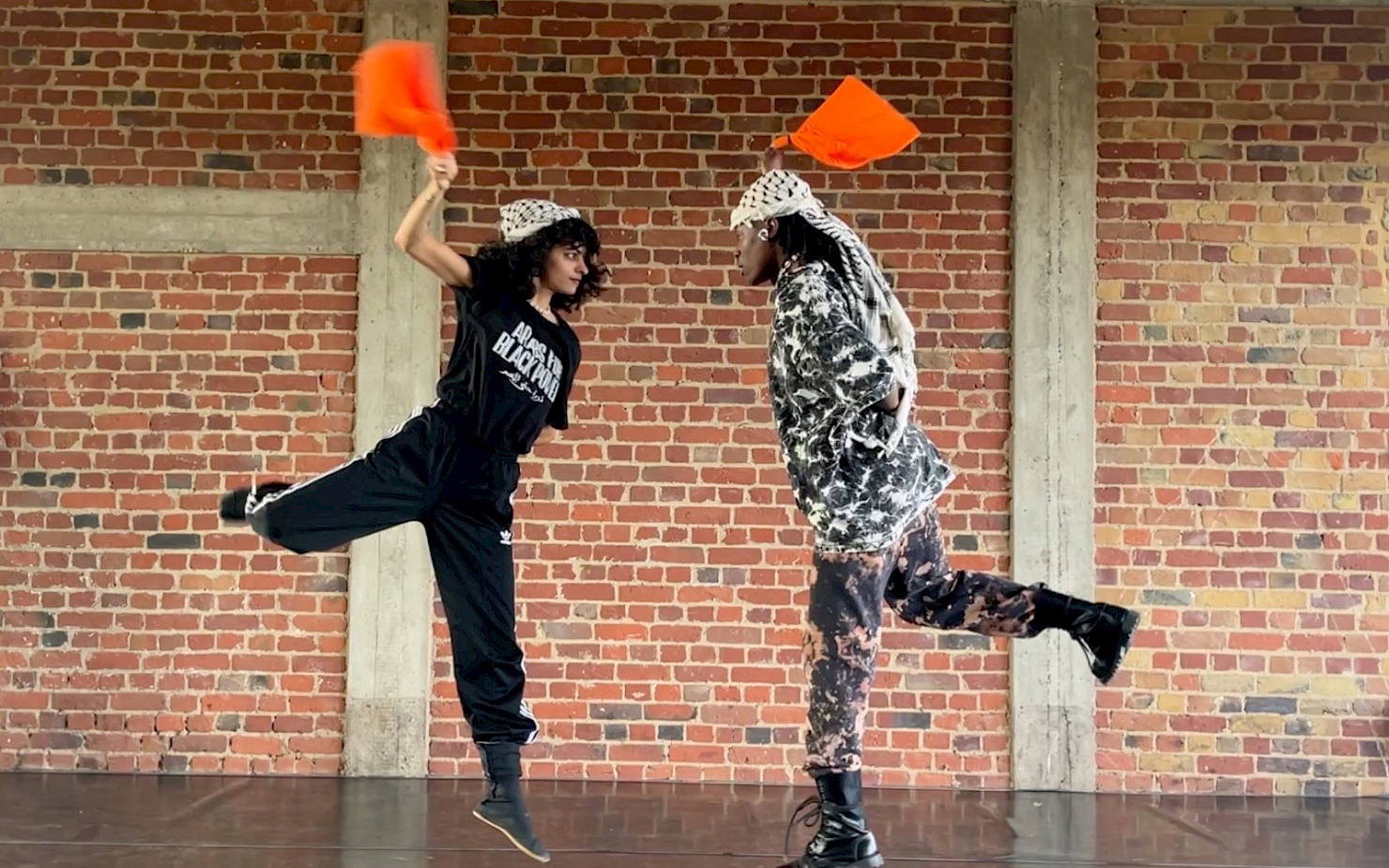
The new series “wielding fissures – carving cracks in the surface of the now” confronts our seemingly collective sense of doom, tracing cracks in the present through which we can feel our way towards alternative possible worlds.
From July 2026, Radialsystem is inviting artists whose practice liberates aesthetic forms of expression from existing conventions, questioning dominant narratives. Five Berlin premieres ranging from opera, choreography and documentary forms are accompanied by dialogue formats on “Embodied Practices” and “Local Hosting”. The series runs until summer 2027, and will…
The new series “wielding fissures – carving cracks in the surface of the now” confronts our seemingly collective sense of doom, tracing cracks in the present through which we can feel our way towards alternative possible worlds.
From July 2026, Radialsystem is inviting artists whose practice liberates aesthetic forms of expression from existing conventions, questioning dominant narratives. Five Berlin premieres ranging from opera, choreography and documentary forms are accompanied by dialogue formats on “Embodied Practices” and “Local Hosting”. The series runs until summer 2027, and will be opened by choreographers Alice Ripoll and Sorour Darabi.
How can we picture the future in times of crisis? Reactionary ideologies are gaining strength worldwide, social movements against inequality are increasingly endangered, and marginalised bodies are being systematically excluded. Even culture and artistic imagination are starting to be conceptualised as potential threats. “wielding fissures” frames the act of looking ahead as an act of hope, an open fracture point, in which new forms of imagining can be explored. The series brings together choreographic works that conceptualise the body as a site of difference, vulnerability, and resourcefulness, making desires that continue to resonate tangible in the chaos of the present.
“Embodied Practices” explores ways of preserving and passing on body practices from different cultural contexts. Participants are invited to dive into the artistic forms of expression presented in the works featured in “wielding fissures” alongside the artists.
“Local Hosting” is a new dialogical format in which we bring the performing artists, Berlin cultural practitioners, and guests from other disciplines together, to enter into conversation with the public. Connections between different contexts can be made in this way, overcoming differences and opening a space for reflection, surprising insights, and exchange.
As part of the opening weekend of “wielding fissures,” we are also pleased to welcome, in close partnership, the second edition of UNEXPECTED LESSONS – Knowledges of Body and Sound, which is dedicated to music and dance practices as forms of resistance. With the “Meshwar Mixtapes” and a Dabke workshop, spaces for listening, storytelling, and collective movement emerge.
The “wielding fissures” series is funded by the Berlin Senate Department for Culture and Social Cohesion. With support from the Radial Foundation.
Mille et Une Nuits – Performative Opera by Sorour Darabi
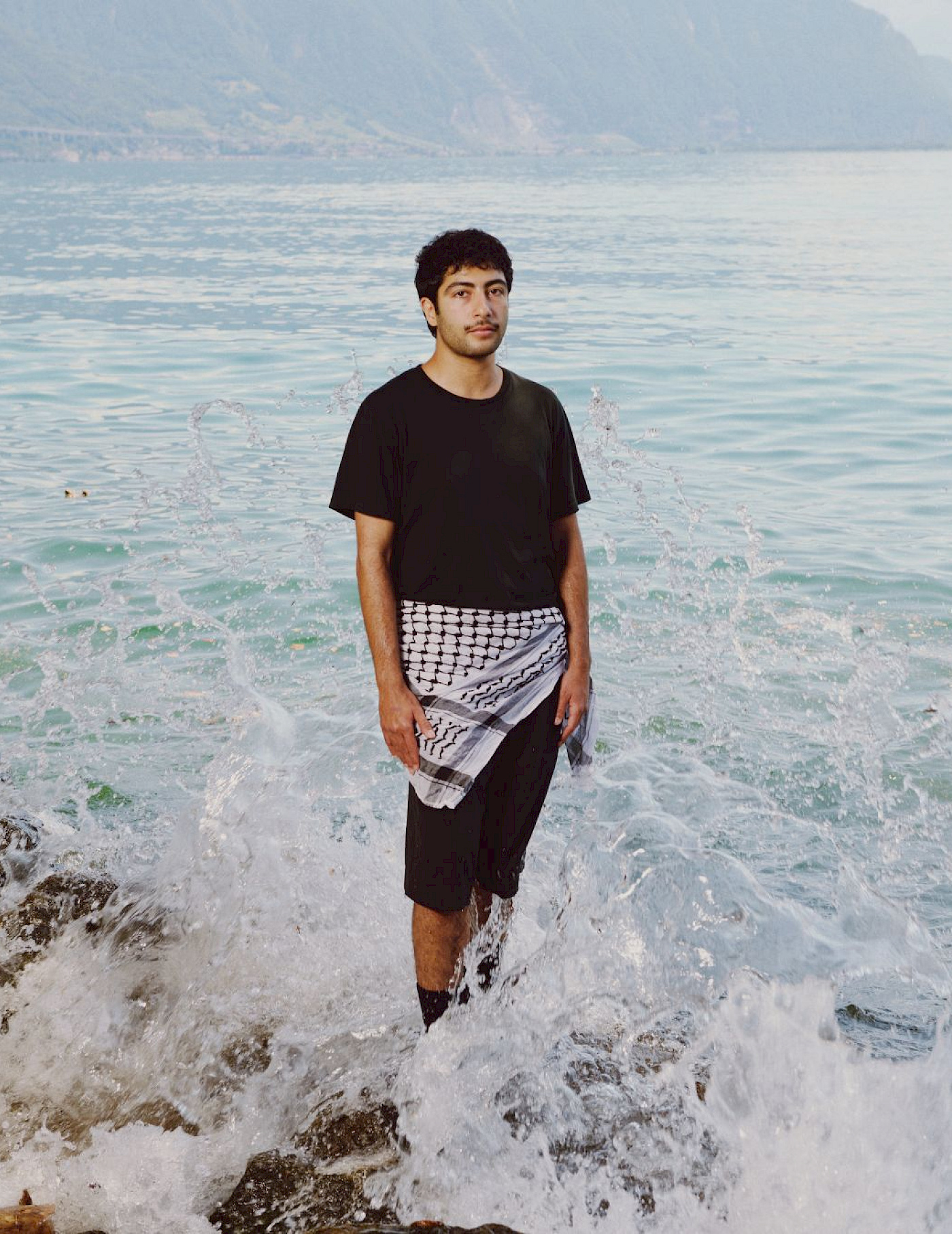
To open the new series “wielding fissures – carving cracks in the surface of the now“ in Radialsystem, Iranian choreographer Sorour Darabi presents the German premiere of “Mille et Une Nuits”. This performative opera gives space to voices previously pushed aside in ancient myth. To introduce this theme, the artist is inviting dance and and voice enthusiasts to explore select moments from the creative process behind “Mille et One Nuits”, through “It Takes a Broken Voice”.
Sorour Darabi started integrating the voice into his choreographic process several years ago. For “Mille et Une Nuits” he…
To open the new series “wielding fissures – carving cracks in the surface of the now“ in Radialsystem, Iranian choreographer Sorour Darabi presents the German premiere of “Mille et Une Nuits”. This performative opera gives space to voices previously pushed aside in ancient myth. To introduce this theme, the artist is inviting dance and and voice enthusiasts to explore select moments from the creative process behind “Mille et One Nuits”, through “It Takes a Broken Voice”.
Sorour Darabi started integrating the voice into his choreographic process several years ago. For “Mille et Une Nuits” he collaborated with Henry Brown, a trans opera singer and researcher specialising in trans voices in opera. Together, they began intensive voice work with all the performers.
In this embodied practice session, Sorour Darabi invites participants to work on a trans-friendly vocal aesthetic. Emphasis is placed on creativity, and the ways in which vocal transition – especially in connection with hormone therapy – can change and enrich our relationship with the body and the voice.
Mille et Une Nuits – Performative Opera by Sorour Darabi
Out of the vast expanse of the night, an opera for the 21st century emerges, bringing new aesthetics and perspectives, and a different relationship to the world: Iranian choreographer Sorour Darabi presents his first opera in Radialsystem with “Mile et Une Nuits” – an immersive performance, which gives space to voices that were pushed aside in ancient myth. The German premiere of Darabi’s opera also marks the opening of the new series “wielding fissures – carving cracks in the surface of the now” in Radialsystem.
“Mille et Une Nuits” illuminates “One thousand and One Nights” from the…
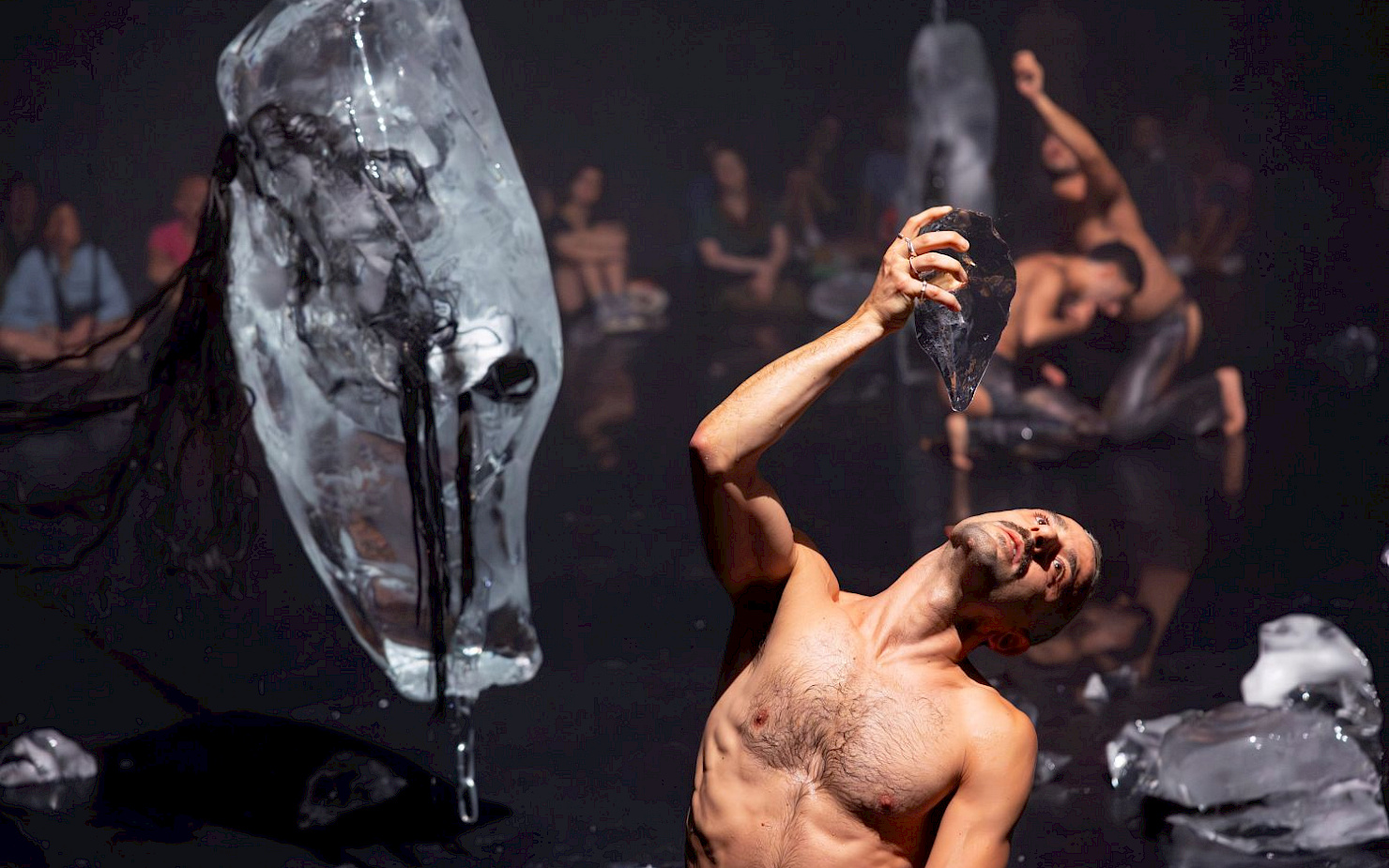
Out of the vast expanse of the night, an opera for the 21st century emerges, bringing new aesthetics and perspectives, and a different relationship to the world: Iranian choreographer Sorour Darabi presents his first opera in Radialsystem with “Mile et Une Nuits” – an immersive performance, which gives space to voices that were pushed aside in ancient myth. The German premiere of Darabi’s opera also marks the opening of the new series “wielding fissures – carving cracks in the surface of the now” in Radialsystem.
“Mille et Une Nuits” illuminates “One thousand and One Nights” from the perspective of the storyteller, Scheherazade. The original work, conceived by a heterosexual cis man, was often criticised for reducing the figure of Scheherazade to a storytelling instrument, banishing her body, her wishes and her subjectivity into the background to serve the author’s purposes. In Sorour Darabi’s “Mille et Une Nuits”, the night is not just a metaphor for the creation of stories: it is a space in which Scheherazade’s true identity can finally blossom – as queer myth, far away from the demands of a cis-heteronormative world.
© Laurent Philippe
Brazilian Urban Dances – Embodied Practice mit Hiltinho Fantástico und Katiany Correia
To kick off Radialsystem’s new series “wielding fissures – carving cracks in the surface of the now”, Brazilian choreographer Alice Ripoll presents a performance of “Adorno” with Cia REC, a group of artists from Rio de Janeiro. Ripoll’s work is rooted in contemporary dance and urban dance styles from Brazil. In addition, dancers Hiltinho Fantástico and Katiany Correia will share techniques from the Brazilian urban dance styles Passinho and Rebolado, as part of an Embodied Practice session for dance professionals and interested members of the public.
Passinho originated in the favelas of Rio de…
To kick off Radialsystem’s new series “wielding fissures – carving cracks in the surface of the now”, Brazilian choreographer Alice Ripoll presents a performance of “Adorno” with Cia REC, a group of artists from Rio de Janeiro. Ripoll’s work is rooted in contemporary dance and urban dance styles from Brazil. In addition, dancers Hiltinho Fantástico and Katiany Correia will share techniques from the Brazilian urban dance styles Passinho and Rebolado, as part of an Embodied Practice session for dance professionals and interested members of the public.
Passinho originated in the favelas of Rio de Janeiro. It is danced to funk carioca rhythms, and is known for its agility, complex foot movements, and dynamic energy. The style combines influences from other dance forms, including breaking, popping, frevo, samba, kuduro, and others. These days, Passinho is often practiced at dance battles and on stages. Rebolado is also danced to funk carioca, and can be described as the Brazilian version of twerking. The main focus is on relaxing and controlling the hip muscles, and developing a feeling for rhythm and movement possibilities. Groove and body coordination are also explored in the process.
Adorno – Performance von Alice Ripoll
In “Adorno”, the Portuguese word for “jewellery”, “ornament” or “decoration”, Alice Ripoll juxtaposes the age of algorithms with that which makes us most human: ornamental gestures, changeable moods, and spontaneous desires - the apparently trivial embellishments which we all use to construct our own lives. The Berlin premiere of Alice Ripoll’s performance also marks the opening of the new series “wielding fissures - carving cracks in the surface of the now” in Radialsystem.
On her search for connection in difference, the choreographer explores the question of how to conceptualise a “we”, when…
In “Adorno”, the Portuguese word for “jewellery”, “ornament” or “decoration”, Alice Ripoll juxtaposes the age of algorithms with that which makes us most human: ornamental gestures, changeable moods, and spontaneous desires - the apparently trivial embellishments which we all use to construct our own lives. The Berlin premiere of Alice Ripoll’s performance also marks the opening of the new series “wielding fissures - carving cracks in the surface of the now” in Radialsystem.
On her search for connection in difference, the choreographer explores the question of how to conceptualise a “we”, when no two individuals in our population of 8 million people are identical. The audience is carried by a tempestuous group, moving forwards and backwards in waves like the course of history itself. Scenes unfurl in a dreamlike atmosphere, confronting us with what we think is unique: our memories, our bodies, our affections - our inner tides.
Sat 01 08 2026 19 h
Sun 02 08 2026 18 h

© Renato Mangolin
UNEXPECTED LESSON 2: Music as Resistance
As part of “wielding fissures – carving cracks in the surface of the now”, we are also presenting the second part of the series “UNEXPECTED LESSONS – Knowledges of Body and Sound.” The second edition, titled “Music as Resistance,” is dedicated to various music and dance practices as forms of resistance. Alongside a Dabke workshop with Nancy Naser Al Deen, DJ DumTak and Homaira host a listening session called “Meshwar Mixtapes – Intro to Afghanistan”.
Programme
Sat, 01 August 2026
17 – 19 h: „LA PALABRE Space“ – Tea, Reading & Resting Room with artistic interventions*
17 h: „Meshwar…
As part of “wielding fissures – carving cracks in the surface of the now”, we are also presenting the second part of the series “UNEXPECTED LESSONS – Knowledges of Body and Sound.” The second edition, titled “Music as Resistance,” is dedicated to various music and dance practices as forms of resistance. Alongside a Dabke workshop with Nancy Naser Al Deen, DJ DumTak and Homaira host a listening session called “Meshwar Mixtapes – Intro to Afghanistan”.
Programme
Sat, 01 August 2026
17 – 19 h: „LA PALABRE Space“ – Tea, Reading & Resting Room with artistic interventions*
17 h: „Meshwar Mixtapes – Intro to Afghanistan“ – Listening-Session with DJ DumTak & Homaira
Sun, 02 August 2026
17 – 19 h: „LA PALABRE Space“ – Tea, Reading & Resting Room with artistic interventions*
17 h: „Dabke-Workshop“ – Nancy Naser Al Deen
*The program at LA PALABRE Space is curated by Arantxa Ciafrino.