
Embodied Practices – Talk on embodied knowledge
with Laura Campaz, Jenny M. Díaz Muñoz, Julieth Morales and Maque Pereyra
Talk
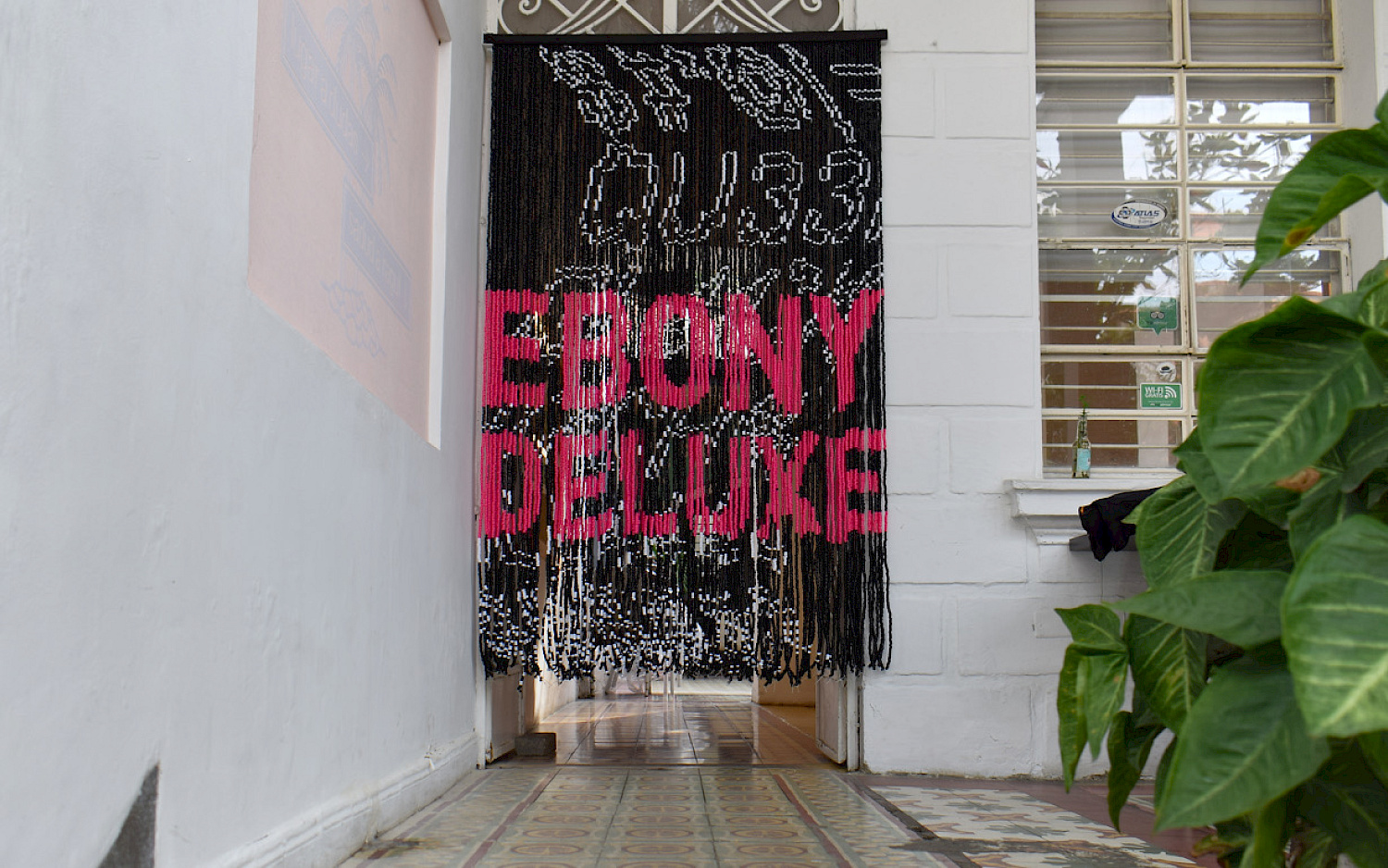
© Laura Campaz
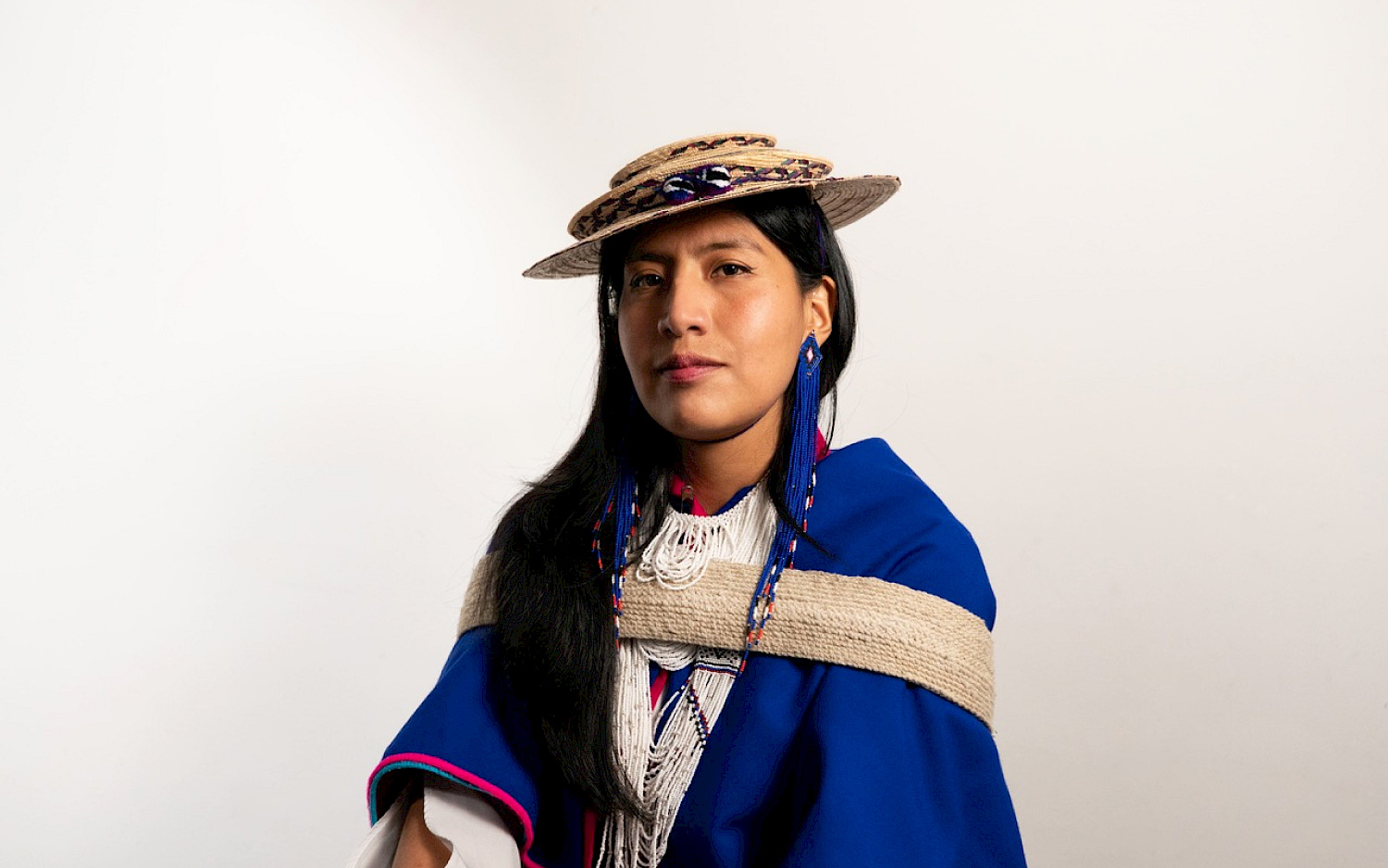
© Julieth Morales
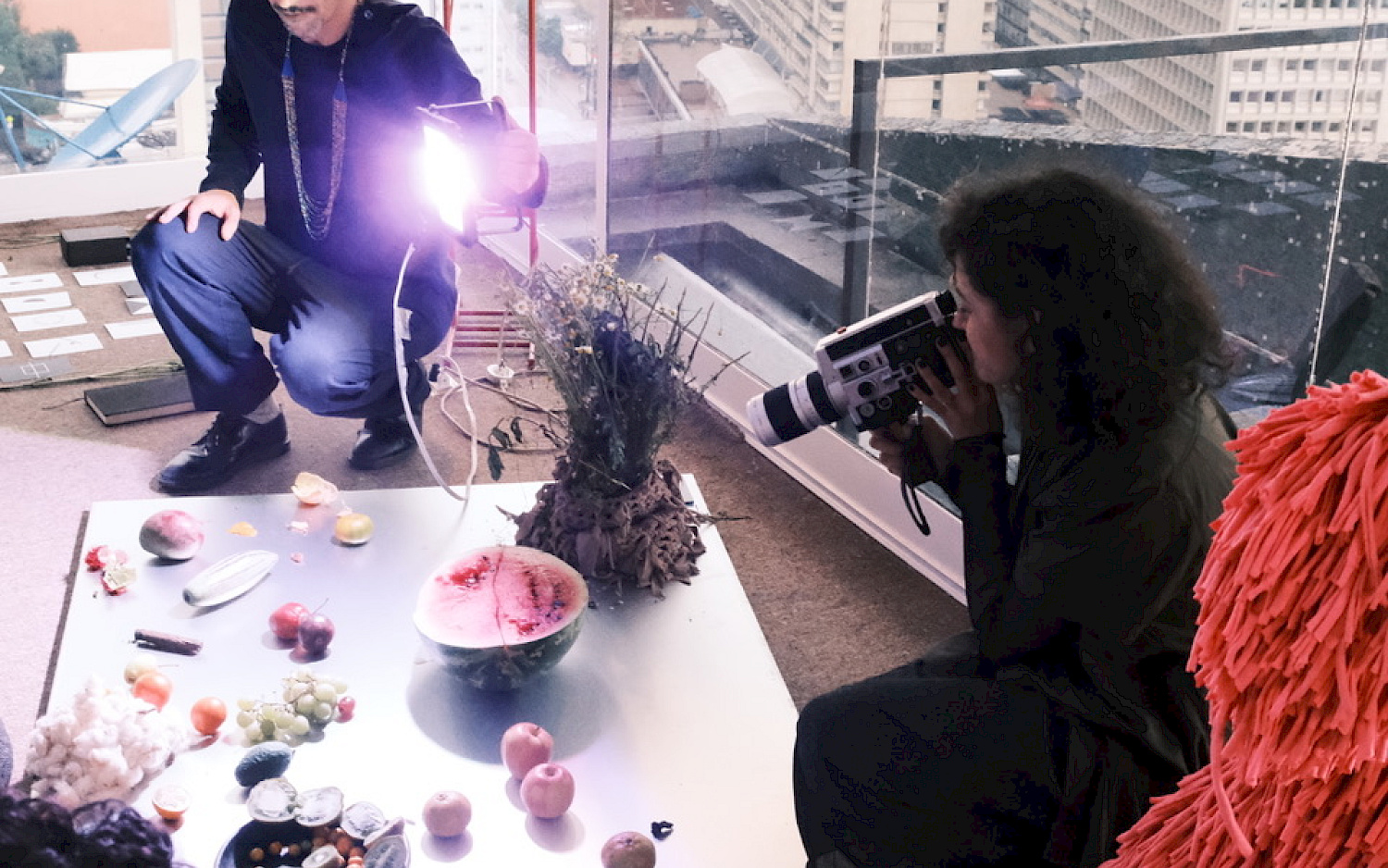
© Jenny Diaz Munoz
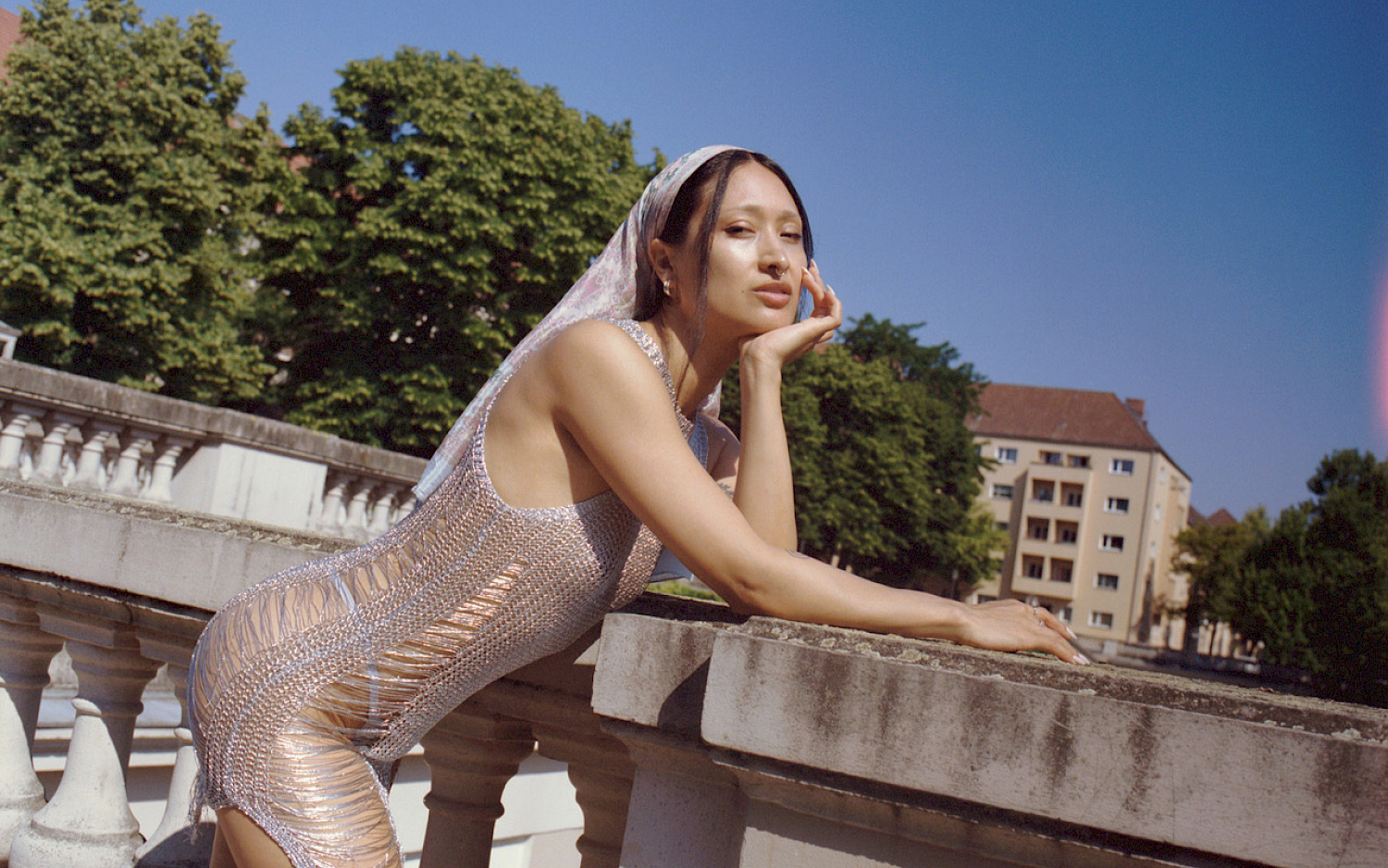
© Camilo Glavis
Embodied knowledge is a situated, living practice. It emerges through movement, ritual and sensory experience, shaping how people remember, form relationships and locate themselves in the world. Through collective practice, it is passed on, preserved and transformed with the bodies, places and encounters that carry it.
On 31 October, “Embodied Practices” brings together the artistic and curatorial practices of Laura Campaz, Jenny M. Díaz Muñoz, Julieth Morales and Maque Pereyra.
From an Afro-Colombian perspective, Laura Campaz brings together archival work, digital technologies and speculative imagination. As a Misak artist, Julieth Morales reinterprets bodily and ritual practices while questioning colonial influences and gender roles. Through collaborative processes of research and creation, Jenny M. Díaz Muñoz connects art, politics and historical memory, taking rituals and affects as points of departure. Through music, movement and the practice of Yoggaton, Maque Pereyra opens pathways to embodied knowledge through pleasure, sensuality and spirituality.
In dialogue, they ask how artistic and curatorial practice transforms inherited forms of knowledge and opens spaces for other experiences and relationships. Works by the artists are presented in the space and offer further points of departure for the conversation.
Before the talk, Maque Pereyra's Embodied Practice “Yoggaton: Transformative Pleasure” will take place.
Visitor Information
In English.
Cast


Talk
Laura Campaz
Jenny M. Díaz Muñoz
Julieth Morales
Maque Pereyra
Cast
Talk
Laura Campaz
Jenny M. Díaz Muñoz
Julieth Morales
Maque Pereyra
Biographies
Laura Campaz is an Afro-Colombian visual artist, curator and cultural organiser. Campaz’s practice operates at the intersection of the archive, cyberethnography and speculative imagination, examining racialisation, the body, representation and contemporary technologies as fields of meaning-making and knowledge production. Working with painting, collage, video, photography, installation and textiles, Campaz explores Afro-diasporic memories and cultures. Campaz has developed curatorial, educational and community projects centred on Afro-descendant artistic practices across different regions of Colombia. In 2020, Campaz founded Prietitud, a platform preserving a digital archive of Afro-Colombian artists.
Jenny M. Díaz Muñoz is a curator and writer on contemporary art. Her practice focuses on collaborative research and creation processes that explore relationships between art and politics. She considers herself a post-esoteric curator: rituals and affects are the impulses that drive collaborations beyond art and curating. She is interested in human experience, dialogues with diverse visible and invisible beings, artistic experimentation and gender studies, in dialogue with historical memory processes. She is currently a curator for “Making Peace Work” at the University of Bern, Switzerland, funded by the Swiss National Science Foundation. She has worked with Colombia’s Truth Commission, the Museum of Memory of Colombia and the Museums of the National University of Colombia, as well as on independent projects. She writes for Arteinformado, Chiquilla te quiero and Cerosetenta.
Julieth Morales is a visual artist and Indigenous performer from the Misak people. Her work explores relationships between gender, identity and ethnicity, drawing on her experiences as an Indigenous woman in a context shaped by Westernisation. Morales studied Fine Arts at the University of Cauca. Through performance, video, photography, painting and drawing, she uses her body to reinterpret her community’s traditions from a critical, contemporary perspective. She questions colonial impositions, religious syncretism and the role of women in the Misak worldview. Weaving, ceremonial adornments and the body become vehicles of cultural resistance and healing. Her practice connects spirituality and memory with contemporary questions of gender and territory.
Maque Pereyra is a Berlin-based artist, performer, musician and curator from Bolivia. Her interdisciplinary work combines choreography, music production, curating, DJing and audiovisual practice as extensions of the performing body. Her work has been presented at Sophiensæle, HKW, CTM Festival, Berlin Art Week and Kunsthalle Wien, among others. Pereyra is the founder of the movement practice Yoggaton and co-founder of Choka and Suena Berlin, platforms that bring visibility to artistic and musical perspectives and sounds from the Global South. She has held a DAAD scholarship and a fellowship at the Leslie-Lohman Museum of Art in New York, and co-curated the EXPO Festival at English Theatre Berlin. Since 2022, she has been a guest lecturer at HZT Berlin. In 2025, she released her debut EP “Baba” and “Baba Remixes.”
Biographies
Laura Campaz is an Afro-Colombian visual artist, curator and cultural organiser. Campaz’s practice operates at the intersection of the archive, cyberethnography and speculative imagination, examining racialisation, the body, representation and contemporary technologies as fields of meaning-making and knowledge production. Working with painting, collage, video, photography, installation and textiles, Campaz explores Afro-diasporic memories and cultures. Campaz has developed curatorial, educational and community projects centred on Afro-descendant artistic practices across different regions of Colombia. In 2020, Campaz founded Prietitud, a platform preserving a digital archive of Afro-Colombian artists.
Jenny M. Díaz Muñoz is a curator and writer on contemporary art. Her practice focuses on collaborative research and creation processes that explore relationships between art and politics. She considers herself a post-esoteric curator: rituals and affects are the impulses that drive collaborations beyond art and curating. She is interested in human experience, dialogues with diverse visible and invisible beings, artistic experimentation and gender studies, in dialogue with historical memory processes. She is currently a curator for “Making Peace Work” at the University of Bern, Switzerland, funded by the Swiss National Science Foundation. She has worked with Colombia’s Truth Commission, the Museum of Memory of Colombia and the Museums of the National University of Colombia, as well as on independent projects. She writes for Arteinformado, Chiquilla te quiero and Cerosetenta.
Julieth Morales is a visual artist and Indigenous performer from the Misak people. Her work explores relationships between gender, identity and ethnicity, drawing on her experiences as an Indigenous woman in a context shaped by Westernisation. Morales studied Fine Arts at the University of Cauca. Through performance, video, photography, painting and drawing, she uses her body to reinterpret her community’s traditions from a critical, contemporary perspective. She questions colonial impositions, religious syncretism and the role of women in the Misak worldview. Weaving, ceremonial adornments and the body become vehicles of cultural resistance and healing. Her practice connects spirituality and memory with contemporary questions of gender and territory.
Maque Pereyra is a Berlin-based artist, performer, musician and curator from Bolivia. Her interdisciplinary work combines choreography, music production, curating, DJing and audiovisual practice as extensions of the performing body. Her work has been presented at Sophiensæle, HKW, CTM Festival, Berlin Art Week and Kunsthalle Wien, among others. Pereyra is the founder of the movement practice Yoggaton and co-founder of Choka and Suena Berlin, platforms that bring visibility to artistic and musical perspectives and sounds from the Global South. She has held a DAAD scholarship and a fellowship at the Leslie-Lohman Museum of Art in New York, and co-curated the EXPO Festival at English Theatre Berlin. Since 2022, she has been a guest lecturer at HZT Berlin. In 2025, she released her debut EP “Baba” and “Baba Remixes.”
Visitor Information
In English.
Credits
“Embodied Practices” is funded by the Radialstiftung and through the “Anbahnung” fund of the German Federal Cultural Foundation as part of the “WAYS – Fair and Sustainable International Partnerships” program.
Credits
“Embodied Practices” is funded by the Radialstiftung and through the “Anbahnung” fund of the German Federal Cultural Foundation as part of the “WAYS – Fair and Sustainable International Partnerships” program.
Embodied knowledge is a situated, living practice. It emerges through movement, ritual and sensory experience, shaping how people remember, form relationships and locate themselves in the world. Through collective practice, it is passed on, preserved and transformed with the bodies, places and encounters that carry it.
On 31 October, “Embodied Practices” brings together the artistic and curatorial practices of Laura Campaz, Jenny M. Díaz Muñoz, Julieth Morales and Maque Pereyra.
From an Afro-Colombian perspective, Laura Campaz brings together archival work, digital technologies and speculative imagination. As a Misak artist, Julieth Morales reinterprets bodily and ritual practices while questioning colonial influences and gender roles. Through collaborative processes of research and creation, Jenny M. Díaz Muñoz connects art, politics and historical memory, taking rituals and affects as points of departure. Through music, movement and the practice of Yoggaton, Maque Pereyra opens pathways to embodied knowledge through pleasure, sensuality and spirituality.
In dialogue, they ask how artistic and curatorial practice transforms inherited forms of knowledge and opens spaces for other experiences and relationships. Works by the artists are presented in the space and offer further points of departure for the conversation.
Before the talk, Maque Pereyra's Embodied Practice “Yoggaton: Transformative Pleasure” will take place.
Cast
Talk
Laura Campaz
Jenny M. Díaz Muñoz
Julieth Morales
Maque Pereyra
Biographies
Laura Campaz is an Afro-Colombian visual artist, curator and cultural organiser. Campaz’s practice operates at the intersection of the archive, cyberethnography and speculative imagination, examining racialisation, the body, representation and contemporary technologies as fields of meaning-making and knowledge production. Working with painting, collage, video, photography, installation and textiles, Campaz explores Afro-diasporic memories and cultures. Campaz has developed curatorial, educational and community projects centred on Afro-descendant artistic practices across different regions of Colombia. In 2020, Campaz founded Prietitud, a platform preserving a digital archive of Afro-Colombian artists.
Jenny M. Díaz Muñoz is a curator and writer on contemporary art. Her practice focuses on collaborative research and creation processes that explore relationships between art and politics. She considers herself a post-esoteric curator: rituals and affects are the impulses that drive collaborations beyond art and curating. She is interested in human experience, dialogues with diverse visible and invisible beings, artistic experimentation and gender studies, in dialogue with historical memory processes. She is currently a curator for “Making Peace Work” at the University of Bern, Switzerland, funded by the Swiss National Science Foundation. She has worked with Colombia’s Truth Commission, the Museum of Memory of Colombia and the Museums of the National University of Colombia, as well as on independent projects. She writes for Arteinformado, Chiquilla te quiero and Cerosetenta.
Julieth Morales is a visual artist and Indigenous performer from the Misak people. Her work explores relationships between gender, identity and ethnicity, drawing on her experiences as an Indigenous woman in a context shaped by Westernisation. Morales studied Fine Arts at the University of Cauca. Through performance, video, photography, painting and drawing, she uses her body to reinterpret her community’s traditions from a critical, contemporary perspective. She questions colonial impositions, religious syncretism and the role of women in the Misak worldview. Weaving, ceremonial adornments and the body become vehicles of cultural resistance and healing. Her practice connects spirituality and memory with contemporary questions of gender and territory.
Maque Pereyra is a Berlin-based artist, performer, musician and curator from Bolivia. Her interdisciplinary work combines choreography, music production, curating, DJing and audiovisual practice as extensions of the performing body. Her work has been presented at Sophiensæle, HKW, CTM Festival, Berlin Art Week and Kunsthalle Wien, among others. Pereyra is the founder of the movement practice Yoggaton and co-founder of Choka and Suena Berlin, platforms that bring visibility to artistic and musical perspectives and sounds from the Global South. She has held a DAAD scholarship and a fellowship at the Leslie-Lohman Museum of Art in New York, and co-curated the EXPO Festival at English Theatre Berlin. Since 2022, she has been a guest lecturer at HZT Berlin. In 2025, she released her debut EP “Baba” and “Baba Remixes.”