Recuperar la oscuridad para recuperarlo todo
Exhibition with Laura Campaz and Julieth Morales
Exhibition
© Laura Campaz
© Julieth Morales
© Julieth Morales
© Laura Campaz
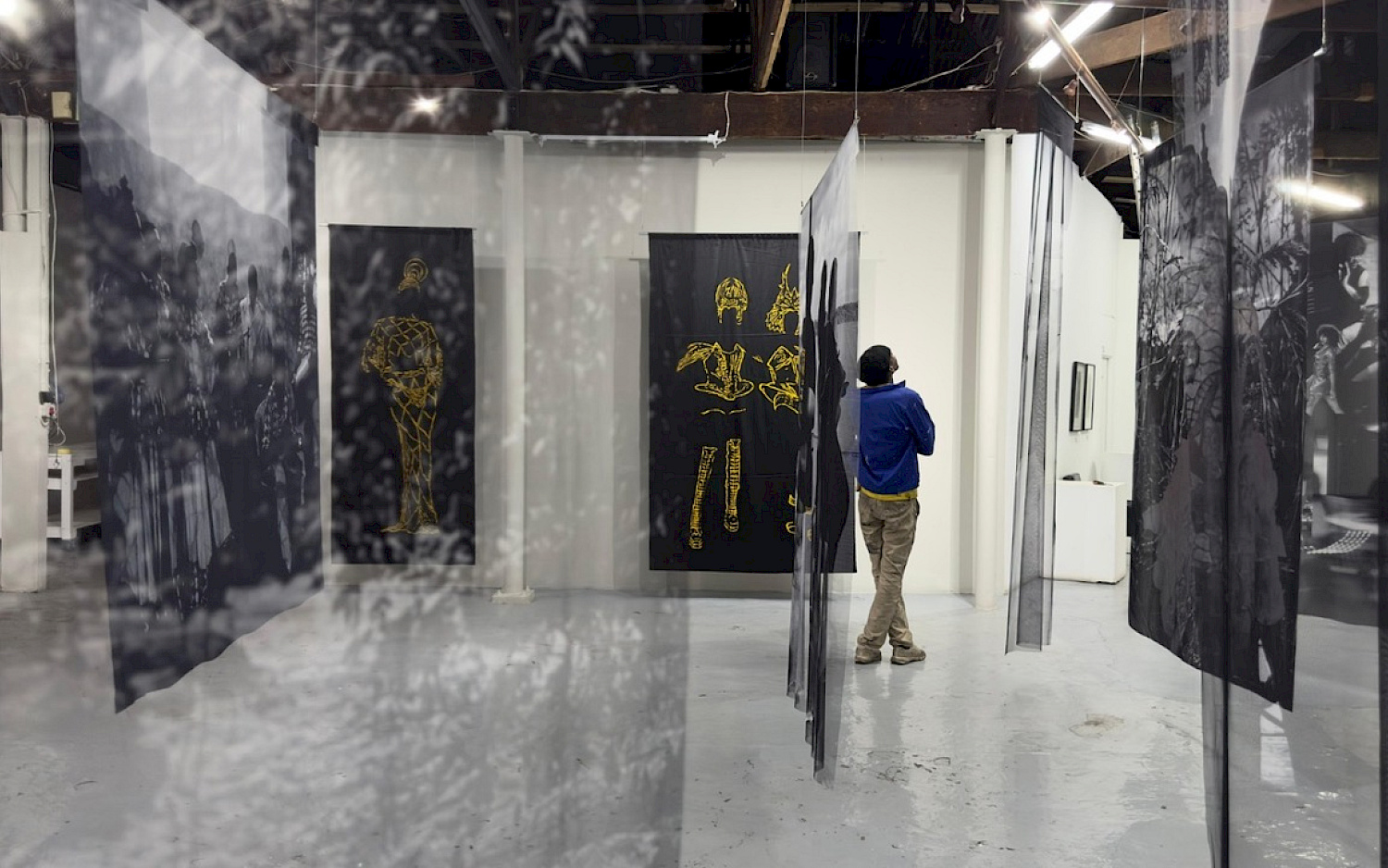
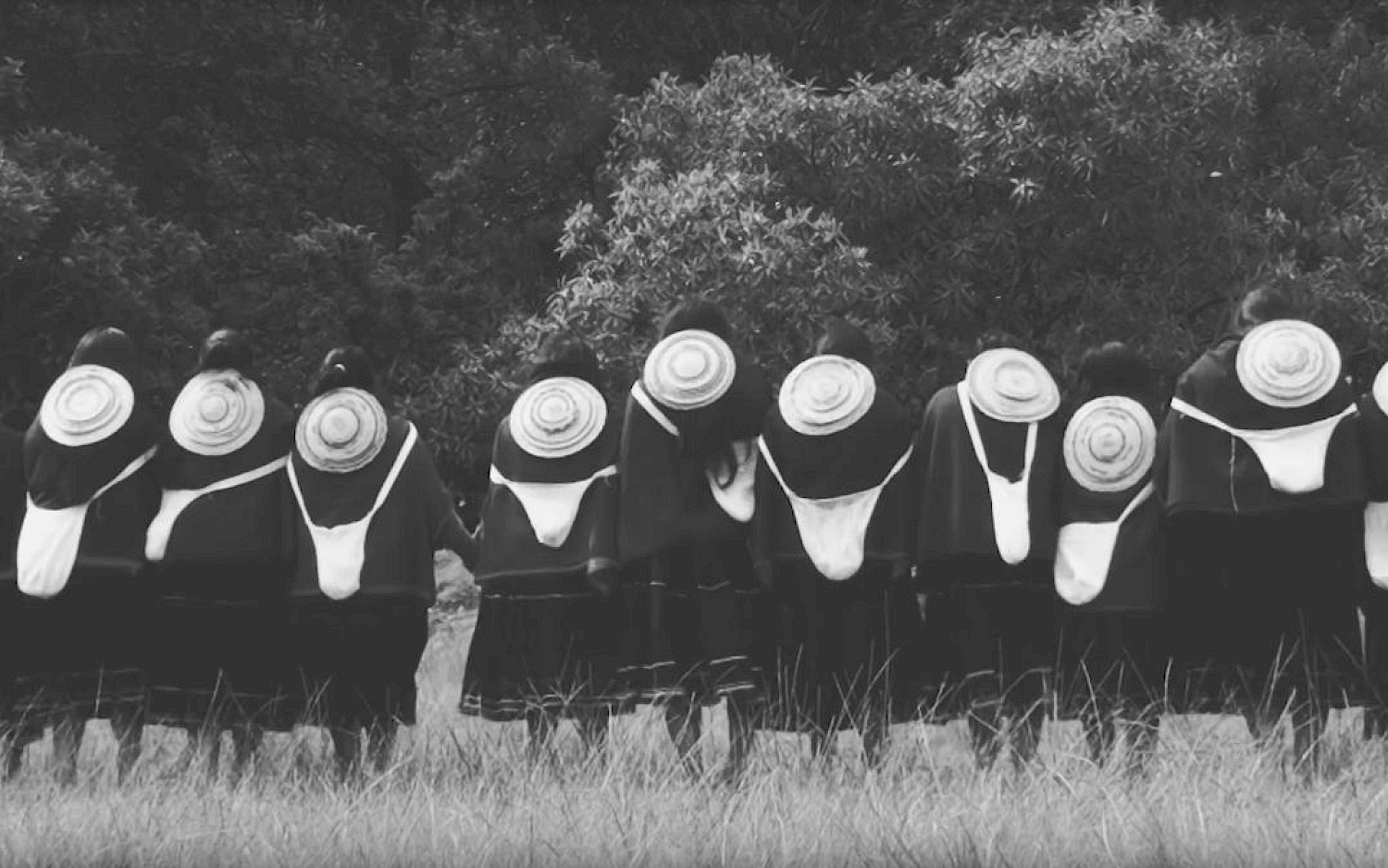
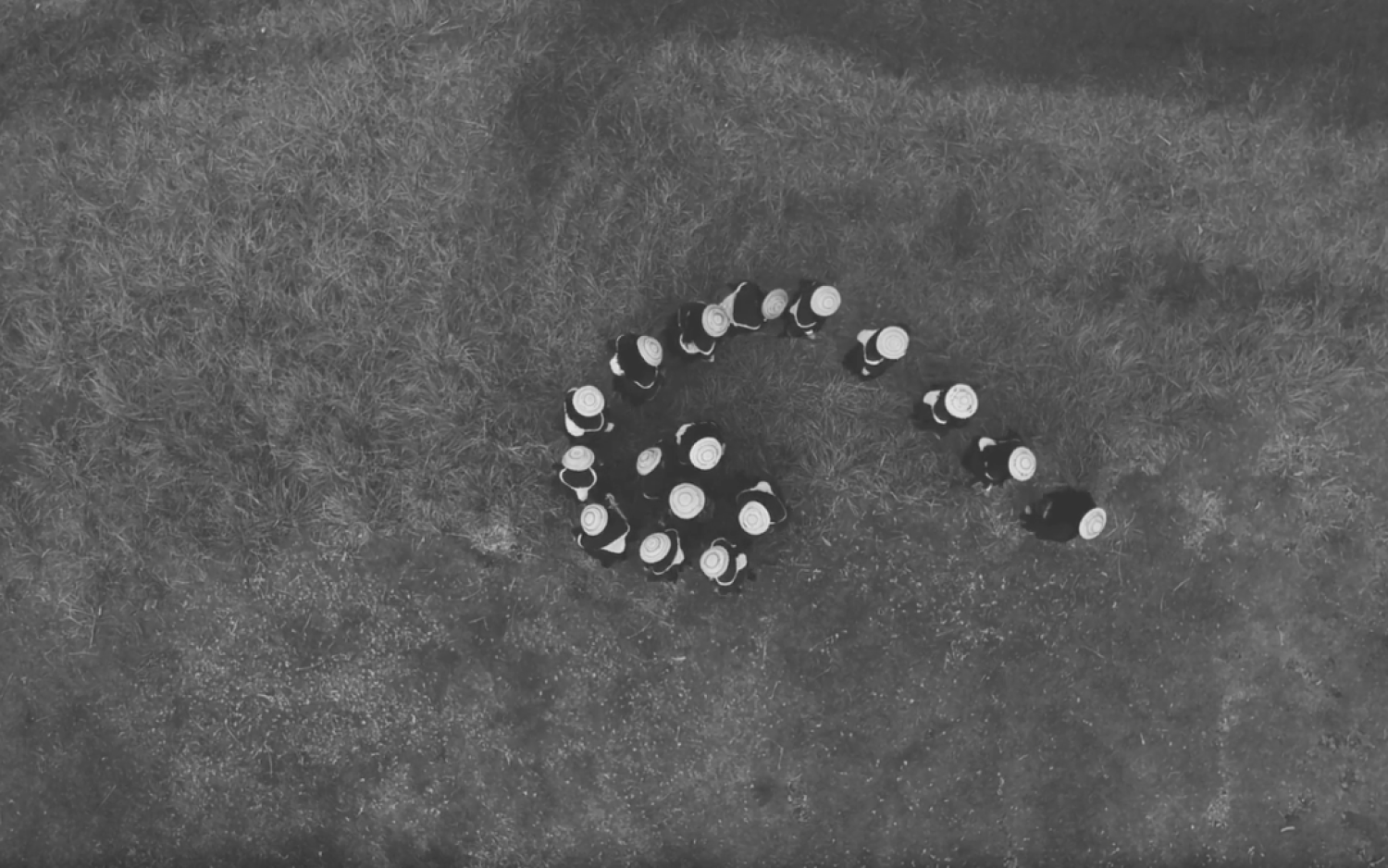
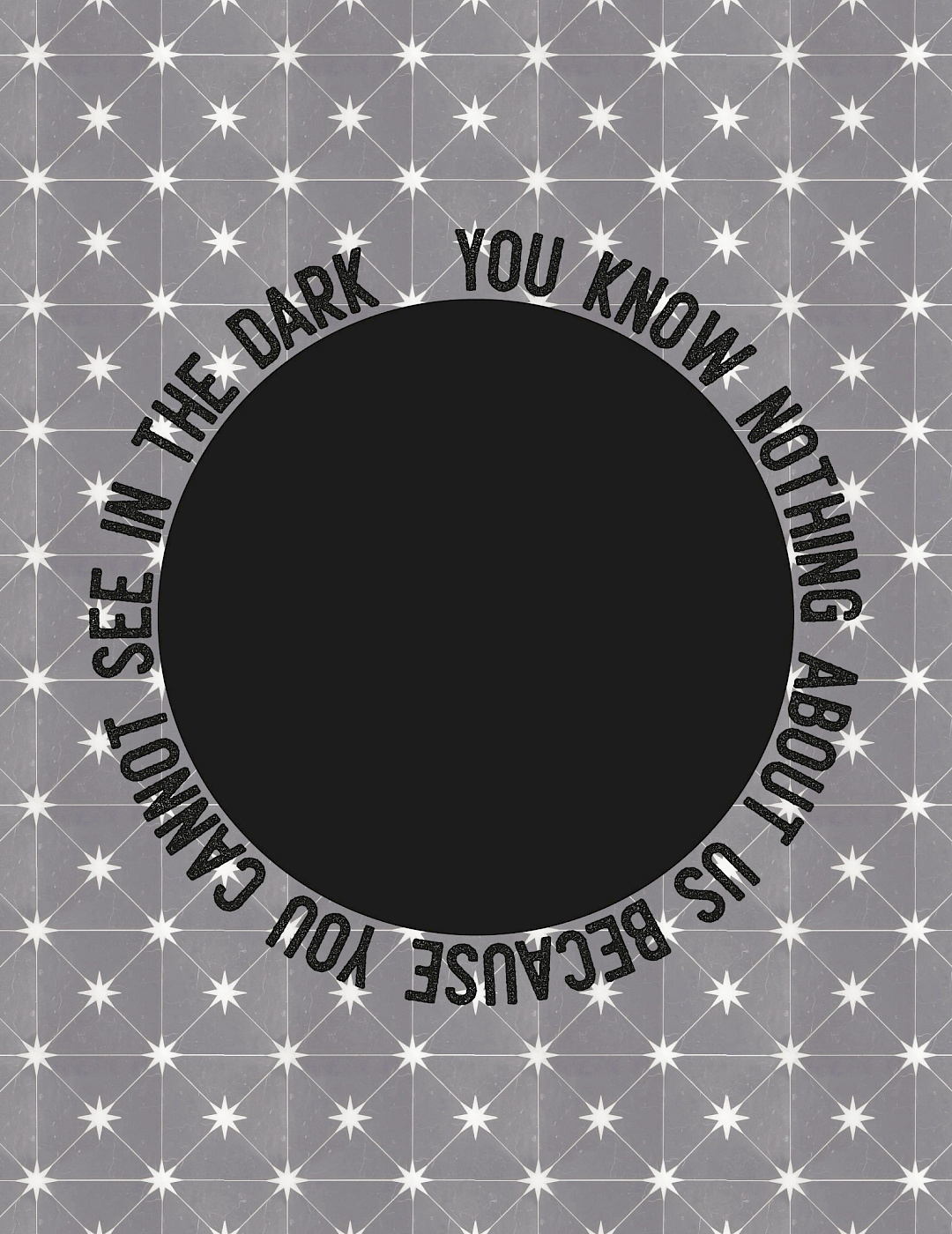
In their joint exhibition “Recuperar la oscuridad para recuperarlo todo”, Laura Campaz and Julieth Morales present works exploring the body, memory and resistance. Campaz presents prints and paintings on fabric under the title “En la oscuridad, el negro se hace poder”. Morales shows the four-channel video work “Resistencia II” and the weaving “Zona Campana” from the series “Recuperar la memoria para recuperarlo todo”.
On Saturday, 31 October 2026, at 6 pm, as part of Embodied Practices, they join curator Jenny M. Díaz Muñoz and artist and performer Maque Pereyra to discuss their artistic and…
In their joint exhibition “Recuperar la oscuridad para recuperarlo todo”, Laura Campaz and Julieth Morales present works exploring the body, memory and resistance. Campaz presents prints and paintings on fabric under the title “En la oscuridad, el negro se hace poder”. Morales shows the four-channel video work “Resistencia II” and the weaving “Zona Campana” from the series “Recuperar la memoria para recuperarlo todo”.
On Saturday, 31 October 2026, at 6 pm, as part of Embodied Practices, they join curator Jenny M. Díaz Muñoz and artist and performer Maque Pereyra to discuss their artistic and curatorial practices. Before the talk, Maque Pereyra's Embodied Practice Yoggaton: Transformative Pleasure will take place.
Laura Campaz
“En la oscuridad, el negro se hace poder”
Working from an Afro-Colombian perspective, Laura Campaz explores Afro-diasporic memories and cultures. Drawing on Édouard Glissant’s concept of opacity, Campaz explores darkness as a space of refuge and resistance. It is a space where the visible fragments, contours dissolve, and the power of black emerges. Her work examines the tension between what is hidden and what is revealed, between opacity that preserves and transparency that exposes.
Opacity does not seek to be understood or translated. It demands respect for what is not fully shown. For queer identities, opacity is vital: it protects spaces of their own and resists categorization and normative expectations. It is a political and poetic gesture that affirms the right to exist without being completely unraveled.
The transparency of the fabrics used in photographs and collage creates poetic layers that interact with one another. This layering seeks depth, asking the gaze to move, reconstruct, and accept the impossibility of a totalizing view. Transparency multiplies possibilities, suggesting that identity, like the image, cannot be exhausted in a single layer.
Campaz challenges the negative connotations historically associated with black and darkness, reimagining them as symbols of strength, depth and resistance. Through this act of re-signification, black becomes an affirmation, a space where what has been misunderstood can find its place as a new form of light, black light.
Julieth Morales
“Resistencia II”
“Zona Campana”
In Julieth Morales’s artistic practice, rejection, pain and affect live on as memories that shape her return to the roots of her identity as an Indigenous Misak woman. Performance becomes a means of restoring her connection to the territory and to her community’s ancestral system of thought.
Her closeness to her mother, her aunts and her grandmother, and their conversations by the fire, have helped her recognise the need to transform certain traditions and ritual practices in order to overcome the oppression that has weighed on the women of her family for generations. Through the act of unweaving, Morales unties the knots of this inheritance and creates a new fabric through which other forms of existence can be woven.
What does it mean to be a Misak woman? How can the duality within her be brought into harmony? Both questions run through her work. Her body, understood through Mørøp, aship, isup, marøp (“listening, seeing, thinking, doing”), sustains a relationship with its surroundings. Ritual rhythms run through this connection and give meaning to existence.
Her embodied knowledge takes shape in weavings, videos, photographs, screen prints and installations produced in collaboration with other women, knowledge holders and ancestral spirits. Her relationship with the land is shaped by history and by the legacy of her ancestors’ struggles to reclaim the territory. For her, inhabiting the world and finding her place within it means returning again and again to the same questions and materialities, which serve both as an archive and as a means of exploration.
Programme
October 31
3.30 – 5.30 p.m. Yoggaton: Transformative Pleasure
Cast


Arists
Laura Campaz
Julieth Morales
Cast
Arists
Laura Campaz
Julieth Morales
Biographies
Laura Campaz is an Afro-Colombian visual artist, curator and cultural organiser. Campaz’s practice operates at the intersection of the archive, cyberethnography and speculative imagination, examining racialisation, the body, representation and contemporary technologies as fields of meaning-making and knowledge production. Working with painting, collage, video, photography, installation and textiles, Campaz explores Afro-diasporic memories and cultures. Campaz has developed curatorial, educational and community projects centred on Afro-descendant artistic practices across different regions of Colombia. In 2020, Campaz founded Prietitud, a platform preserving a digital archive of Afro-Colombian artists.
Julieth Morales is a visual artist and Indigenous performer from the Misak people. Her work explores relationships between gender, identity and ethnicity, drawing on her experiences as an Indigenous woman in a context shaped by Westernisation. Morales studied Fine Arts at the University of Cauca. Through performance, video, photography, painting and drawing, she uses her body to reinterpret her community’s traditions from a critical, contemporary perspective. She questions colonial impositions, religious syncretism and the role of women in the Misak worldview. Weaving, ceremonial adornments and the body become vehicles of cultural resistance and healing. Her practice connects spirituality and memory with contemporary questions of gender and territory.
Further Information
Are corporeal techniques part and parcel of what we call culture? Does knowledge emerge through shared bodily practices? And what does this knowledge have to do with power? The series Embodied Practices, which takes place at irregular intervals at Radialsystem, explores forms of preserving and transmitting body-based practices from different cultural contexts. It centres a form of knowledge production that begins with the body and lived experience. Participants are invited to immerse themselves in various forms of artistic expression together with the artists. The series was developed in 2022 with the artists Martha Hincapié Charry, Sandhya Daemgen and Raphael Moussa Hillebrand as part of the project Encounters.
Programme
October 31
3.30 – 5.30 p.m. Yoggaton: Transformative Pleasure
Further Information
Are corporeal techniques part and parcel of what we call culture? Does knowledge emerge through shared bodily practices? And what does this knowledge have to do with power? The series Embodied Practices, which takes place at irregular intervals at Radialsystem, explores forms of preserving and transmitting body-based practices from different cultural contexts. It centres a form of knowledge production that begins with the body and lived experience. Participants are invited to immerse themselves in various forms of artistic expression together with the artists. The series was developed in 2022 with the artists Martha Hincapié Charry, Sandhya Daemgen and Raphael Moussa Hillebrand as part of the project Encounters.
Credits
“Recuperar la oscuridad para recuperarlo todo” is funded by the Radialstiftung and through the “Anbahnung” fund of the German Federal Cultural Foundation as part of the “WAYS – Fair and Sustainable International Partnerships” program.
Credits
“Recuperar la oscuridad para recuperarlo todo” is funded by the Radialstiftung and through the “Anbahnung” fund of the German Federal Cultural Foundation as part of the “WAYS – Fair and Sustainable International Partnerships” program.
In their joint exhibition “Recuperar la oscuridad para recuperarlo todo”, Laura Campaz and Julieth Morales present works exploring the body, memory and resistance. Campaz presents prints and paintings on fabric under the title “En la oscuridad, el negro se hace poder”. Morales shows the four-channel video work “Resistencia II” and the weaving “Zona Campana” from the series “Recuperar la memoria para recuperarlo todo”.
On Saturday, 31 October 2026, at 6 pm, as part of Embodied Practices, they join curator Jenny M. Díaz Muñoz and artist and performer Maque Pereyra to discuss their artistic and curatorial practices. Before the talk, Maque Pereyra's Embodied Practice Yoggaton: Transformative Pleasure will take place.
Laura Campaz
“En la oscuridad, el negro se hace poder”
Working from an Afro-Colombian perspective, Laura Campaz explores Afro-diasporic memories and cultures. Drawing on Édouard Glissant’s concept of opacity, Campaz explores darkness as a space of refuge and resistance. It is a space where the visible fragments, contours dissolve, and the power of black emerges. Her work examines the tension between what is hidden and what is revealed, between opacity that preserves and transparency that exposes.
Opacity does not seek to be understood or translated. It demands respect for what is not fully shown. For queer identities, opacity is vital: it protects spaces of their own and resists categorization and normative expectations. It is a political and poetic gesture that affirms the right to exist without being completely unraveled.
The transparency of the fabrics used in photographs and collage creates poetic layers that interact with one another. This layering seeks depth, asking the gaze to move, reconstruct, and accept the impossibility of a totalizing view. Transparency multiplies possibilities, suggesting that identity, like the image, cannot be exhausted in a single layer.
Campaz challenges the negative connotations historically associated with black and darkness, reimagining them as symbols of strength, depth and resistance. Through this act of re-signification, black becomes an affirmation, a space where what has been misunderstood can find its place as a new form of light, black light.
Julieth Morales
“Resistencia II”
“Zona Campana”
In Julieth Morales’s artistic practice, rejection, pain and affect live on as memories that shape her return to the roots of her identity as an Indigenous Misak woman. Performance becomes a means of restoring her connection to the territory and to her community’s ancestral system of thought.
Her closeness to her mother, her aunts and her grandmother, and their conversations by the fire, have helped her recognise the need to transform certain traditions and ritual practices in order to overcome the oppression that has weighed on the women of her family for generations. Through the act of unweaving, Morales unties the knots of this inheritance and creates a new fabric through which other forms of existence can be woven.
What does it mean to be a Misak woman? How can the duality within her be brought into harmony? Both questions run through her work. Her body, understood through Mørøp, aship, isup, marøp (“listening, seeing, thinking, doing”), sustains a relationship with its surroundings. Ritual rhythms run through this connection and give meaning to existence.
Her embodied knowledge takes shape in weavings, videos, photographs, screen prints and installations produced in collaboration with other women, knowledge holders and ancestral spirits. Her relationship with the land is shaped by history and by the legacy of her ancestors’ struggles to reclaim the territory. For her, inhabiting the world and finding her place within it means returning again and again to the same questions and materialities, which serve both as an archive and as a means of exploration.
Cast
Arists
Laura Campaz
Julieth Morales
Biographies
Laura Campaz is an Afro-Colombian visual artist, curator and cultural organiser. Campaz’s practice operates at the intersection of the archive, cyberethnography and speculative imagination, examining racialisation, the body, representation and contemporary technologies as fields of meaning-making and knowledge production. Working with painting, collage, video, photography, installation and textiles, Campaz explores Afro-diasporic memories and cultures. Campaz has developed curatorial, educational and community projects centred on Afro-descendant artistic practices across different regions of Colombia. In 2020, Campaz founded Prietitud, a platform preserving a digital archive of Afro-Colombian artists.
Julieth Morales is a visual artist and Indigenous performer from the Misak people. Her work explores relationships between gender, identity and ethnicity, drawing on her experiences as an Indigenous woman in a context shaped by Westernisation. Morales studied Fine Arts at the University of Cauca. Through performance, video, photography, painting and drawing, she uses her body to reinterpret her community’s traditions from a critical, contemporary perspective. She questions colonial impositions, religious syncretism and the role of women in the Misak worldview. Weaving, ceremonial adornments and the body become vehicles of cultural resistance and healing. Her practice connects spirituality and memory with contemporary questions of gender and territory.
Related